How to Properly Add Coursera and Professional Certifications to Your ATS Resume
How to Properly Add Coursera and Professional Certifications to Your ATS Resume
The modern job market has shifted dramatically towards skills-based hiring. Employers are no longer looking solely at traditional university degrees; they are actively seeking candidates who demonstrate continuous learning and adaptability.
Online learning platforms have democratized education, allowing professionals to upskill in everything from data analytics to digital marketing and human resource management.
However, earning a credential is only half the battle. The other half is ensuring that the software screening your application actually reads it.
If you do not know how to properly add Coursera and professional certifications to your ATS resume, your hard-earned qualifications might never be seen by a human recruiter.
In this comprehensive guide, we will break down exactly how Applicant Tracking Systems (ATS) work, when you should include your online certifications, where they belong on your resume, and the exact formatting rules you must follow to guarantee your resume passes the bot screening and impresses the hiring manager.
Understanding Applicant Tracking Systems (ATS) and Resume Parsing
Before detailing how to format your certifications, it is crucial to understand the gatekeeper of the modern hiring process: the Applicant Tracking System.
An ATS is a software application that enables the electronic handling of recruitment and hiring needs. Companies use these systems to collect, sort, scan, and rank the thousands of resumes they receive for open positions.
When you upload your resume, the ATS parses the document, meaning it strips away your design, pulls the raw text, and categorizes it into specific fields like “Education,” “Work Experience,” “Skills,” and “Certifications.”
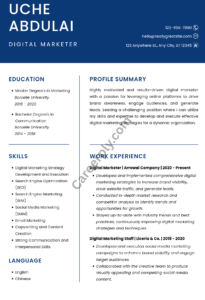
For more context on the technical side, you can explore how Applicant Tracking Systems (ATS) process resumes to understand why formatting is so vital. If your resume uses complex layouts, tables, columns, or images, the parser gets confused.
A beautifully designed logo of the certification you earned will be completely invisible to an ATS. The system only reads text, and it reads text best when it is formatted simply and logically.
Therefore, every professional certification you list must be optimized for text-based parsing while remaining highly readable for the human recruiter who will review your resume after it passes the initial ATS filter.
When Should You Include Professional Certifications?
Not every course you complete deserves a spot on your professional resume. Overcrowding your CV with minor, irrelevant courses can dilute the impact of your major achievements. Before adding a certification, put it through the “4 R’s” test:
1. Relevance
Does this certification directly relate to the job description? If you are applying for an Operations Manager role, a certification in Human Resource Management or Project Management is highly relevant.
If you are applying for a Digital Marketing position, a Google Digital Marketing & E-commerce credential is a perfect fit. However, if you are applying for an accounting job, that introductory course in creative writing from five years ago should be left off.
2. Rigor
Was the certification challenging to obtain? Hiring managers value credentials that require a substantial time investment, rigorous testing, or capstone projects. Professional certificates from major tech companies or comprehensive industry-recognized Coursera programs carry significant weight because employers understand the curriculum’s rigor.
3. Recognition
Who issued the certification? Certifications issued by globally recognized institutions (e.g., Google, IBM, Meta, Microsoft, AWS, or top-tier universities partnering with Coursera) instantly build trust.
Local or national institutional certifications, such as those from the Development Bank of Nigeria (DBN) or other established corporate bodies, also hold strong regional authority.
4. Recency
Technology and industry best practices evolve rapidly. A certification in digital marketing or web development from 2014 is largely obsolete today.
Generally, aim to include certifications acquired within the last three to five years, unless they are foundational credentials that do not expire (such as an HR or Project Management Professional certification).
Where to Place Certifications on Your ATS Resume
Deciding where to place your certifications depends on your career level and how critical the certification is to the job you want. There are three primary strategies for placing certifications on an ATS-friendly resume.
Strategy 1: A Dedicated “Certifications” Section
This is the most common and ATS-safe approach. Create a distinct section header titled “Certifications” or “Professional Certifications.” ATS algorithms are programmed to look for these exact headings.
Place this section:
- Below your Education: If you are a mid-level or senior professional, your Work Experience and Education should come first, followed by Certifications.
- Above your Education: If you are a recent graduate or a career changer where your new digital certifications (like a comprehensive SEO or Tech support course) are more relevant to the role than your university degree.
Strategy 2: The “Education” Section (For Degree Equivalents)
If you do not have a traditional university degree, or if the certification was a massive, multi-month undertaking (like an extensive boot camp or a mini-MBA), you can list it within your Education section. However, you must clearly label it as a certification to avoid misleading the ATS or the recruiter.
Strategy 3: The Professional Summary (For High-Impact Credentials)
If an employer explicitly lists a specific certification as a “Required Qualification” in the job description, do not wait for the ATS to find it at the bottom of page two. Mention it in your opening Professional Summary.
Example: “Detail-oriented Operations Manager and Google Certified Digital Marketer with 5+ years of experience…”
Step-by-Step: How to Format Certifications for ATS
When typing out your certifications, consistency is key. The ATS needs a predictable structure to parse the data correctly. Use standard, simple text (no text boxes or tables).
The Standard Formula
Always include the following four elements in a consistent order:
- Name of the Certification: Write the full, official name. Do not use obscure acronyms unless you also spell them out.
- Issuing Organization: The platform or institution that granted the credential.
- Date of Issue: The month and year you completed it.
- Expiration Date: (If applicable). If it does not expire, omit this.
Formatting Examples
Example 1: A Standard Coursera Certificate
Google Digital Marketing & E-commerce Professional Certificate
Coursera (Issued by Google)
Completed: August 2025
Example 2: A Corporate or Institutional Certification
Human Resource Management Certification
Development Bank of Nigeria (DBN)
Completed: May 2026
Example 3: Including Key Skills (Highly Recommended for ATS)
To maximize your keyword match rate, you can add a brief, one-line description or a list of skills acquired beneath the certification. This feeds the ATS the exact keywords from the job description.
Meta Social Media Marketing Professional Certificate
Coursera (Issued by Meta) | June 2024
Skills Acquired: Campaign Management, Facebook Ads Manager, A/B Testing, Conversion Optimization.
Mapping Job Description Keywords to Your Certifications
Adding a certification is not just about proving you finished a course; it is an opportunity to strategically insert keywords. Applicant Tracking Systems score your resume based on how well it matches the job description.
When you read a job posting, highlight the required hard skills. If the job asks for “Applicant Tracking System (ATS) management,” “on-page SEO,” or “digital content creation,” ensure those exact phrases appear in your resume.
If you learned these skills through your online courses, list them explicitly under the certification. For instance, if your university degree is in Linguistics but you are applying for a Digital Content Management role, your degree proves your strong grasp of language, but your Coursera certifications provide the necessary technical keywords (like SEO, WordPress, or Content Strategy) that the ATS is scanning for.
Research consistently shows the positive impact of continuous learning on career growth. Showing an employer that you actively seek out new knowledge and translate it into practical skills makes you a highly attractive candidate.
Common Formatting Mistakes That Ruin ATS Parsing
Even with the right certifications, poor formatting can cause your resume to be instantly rejected. Avoid these common pitfalls:
1. Using Logos and Graphics
Never insert the visual badge or logo of your certification (e.g., the circular Google or Microsoft badge). ATS software cannot read images. Worse, images can sometimes corrupt the text parsing process, causing the system to scramble the text around the image.
2. Putting Certifications in Tables or Columns
While two-column resume templates look beautiful to the human eye, many older Applicant Tracking Systems read straight across the page from left to right. If you have your experience on the left and certifications in a column on the right, the ATS will mash the sentences together into unreadable gibberish. Use a standard, single-column layout.
3. Including Hyperlinks Incorrectly
While it is acceptable to include a link to your digital credential (like a Credly badge or a Coursera verification link), do not embed the link inside the text (e.g., hiding the URL behind the word “Certificate”).
Some ATS parsers strip embedded hyperlinks, leaving no trace of the URL. Instead, write out the plain text URL or keep the document clean and provide the link only if requested during the interview.
4. Lumping Incomplete Courses with Completed Ones
If you are currently taking a course, you can list it, but you must be transparent. Format it as:
Advanced Search Engine Optimization (SEO)
Coursera (In Progress – Expected Completion: November 2026)
Never claim a certification is complete if you have only audited the course or are halfway through the modules.
Conclusion
Adding Coursera and professional certifications to your ATS resume is one of the most effective ways to bridge experience gaps, prove your dedication to professional development, and inject vital keywords into your application.
By keeping your formatting clean, prioritizing relevance, and ensuring the issuing organizations are clearly stated, you will successfully navigate the bot screening process.
Remember, the goal of your resume is not just to showcase what you have done in the past, but to clearly signal the specialized, modern skills you bring to the future of the company.
Frequently Asked Questions (FAQs)
1. Does a Coursera certificate count as formal education on a resume?
No, a standard Coursera certificate does not count as a formal university degree and should not be disguised as one. However, it is highly respected as a professional development credential.
You should place these in a dedicated “Certifications” or “Professional Development” section rather than mixing them into your university degrees, unless the program was specifically an accredited online degree hosted on the platform.
2. Should I include the verification URL/link to my digital certificate?
It is generally best to leave URLs off the resume to keep the document clean and ATS-friendly, as some parsers struggle with hyperlinks.
Instead, note the credential ID if it is a highly technical certification (like AWS or Cisco). You can provide the actual URL on your LinkedIn profile, which you should definitely link at the top of your resume.
3. Do I need to list all the individual courses inside a Coursera Specialization?
No, listing every single course within a 6-part specialization takes up too much valuable resume real estate and can look like keyword stuffing.
List the overarching title of the completed Specialization or Professional Certificate. If you need to highlight specific competencies, use a brief “Skills Acquired” sub-bullet beneath the main title.
4. How many certifications should I list on my resume?
Quality always beats quantity. Limit your list to the 3 to 5 most relevant and rigorous certifications that align with the specific job you are applying for.
Listing 15 different minor courses from various platforms can make your resume look cluttered and unfocused, potentially distracting the hiring manager from your core competencies and work experience.
5. What if my professional certificate does not have an expiration date?
Many digital skills and foundational management certifications do not expire. If there is no expiration date, simply list the date (Month and Year) you completed the program. This shows the recruiter exactly when you acquired the knowledge, allowing them to judge the recency and relevance of the skills in today’s market.